
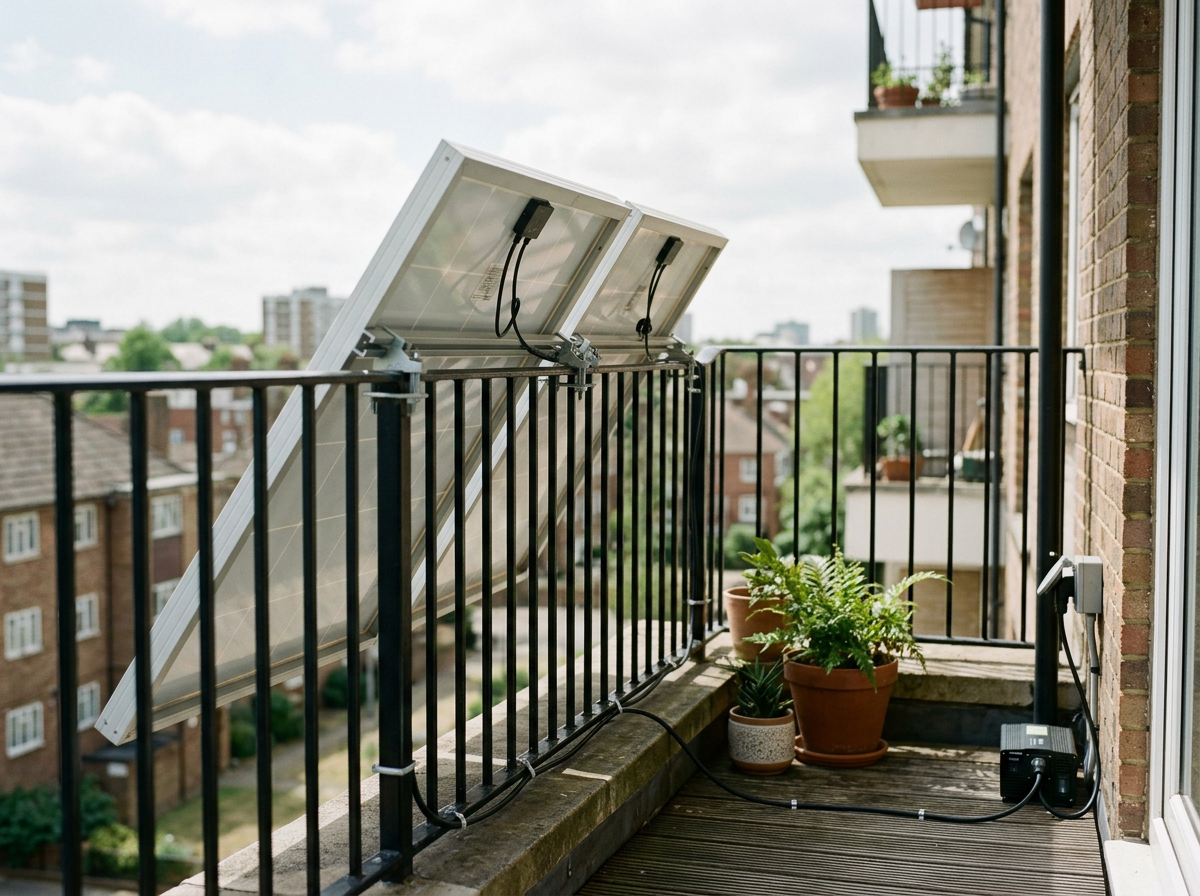
Plug-in Solar in the UK: What You Need To Know Before You Buy.
Plug-in Solar in the UK: What You Need to Know Before You Buy
Thinking about buying plug-in solar? Before you spend your money, there are a few important things to understand about how these systems work, whether your home is suitable and what you need to know about electrical safety and DNO notification.
Plug-in solar can offer a relatively simple way to generate some of your own electricity. But while the equipment may be designed to connect to an existing socket, that doesn’t automatically mean every property or electrical installation is suitable.
What is plug-in solar?
Plug-in solar is a small-scale solar PV system designed to generate electricity and supply it directly into your home. The UK legislation allows for a system of up to 800 watts.
Unlike a conventional rooftop solar installation, plug-in solar is designed to connect to an existing electrical socket, subject to the applicable product and installation requirements.
For some households, it could provide a lower-cost introduction to generating their own electricity.
Can you simply plug it in and switch it on?
Not without checking the requirements first.
A compliant system must meet the applicable product, electrical safety and network requirements. Your home’s electrical installation must also be suitable for the proposed connection.
The condition of your wiring, consumer unit, protective devices and the circuit you intend to use can all affect whether the system is appropriate for your property.
What is G98 and why does DNO notification matter?
G98 is a UK electricity network connection standard covering certain small-scale electricity-generating installations.
Plug-in solar systems must meet the applicable requirements, including the relevant G98 arrangements and notification to the local Distribution Network Operator (DNO).
The notification process is an important part of connecting a compliant system. The precise requirements depend on the equipment and installation.
If you’re unsure what applies to your proposed system, speak to a qualified electrician before connecting it.
Is your home suitable for plug-in solar?
Not every electrical installation is the same.
Older wiring, unsuitable protective devices, existing electrical defects or an unsuitable circuit could mean that remedial work is required before a system can be connected.
An assessment can help identify potential issues and explain what needs attention.
Should you choose plug-in solar or conventional solar PV?
Plug-in solar may suit households looking for a relatively small system (800w) and a lower initial investment.
If you have suitable roof or ground space and want to generate significantly more electricity, a conventional solar PV installation may be worth considering. These are not governed by the same rules and can be much larger in size.
Adding battery storage may also help you make better use of the electricity your solar panels generate.
The right solution depends on your property, electricity use and budget.
Get your electrics checked before you buy
At JCE Contracting Ltd, we offer a Plug-in Solar Suitability Assessment to help you understand whether your home’s electrical installation is suitable for plug-in solar.
We can assess the existing installation, explain any issues we identify and provide a quotation for electrical work where required.
We can also help you understand the relevant G98 and DNO notification requirements.
Thinking about plug-in solar? Check your electrics first.
Here at JCE Contracting we are now offering a suitability assessment to determine if your installation is capable handling a plug-in solar setup. Please get in touch to find out more.
JCE Contracting Ltd
Electrical contractors serving Frome, Bath, Bristol, Somerset and Wiltshire.